
Had to share this amazing story! Everyone is living their own journey ? #beproudofyou
“Being short, overweight, middle-aged and female, I’m not what one expects to see in the gym, especially the free weights area.”
I often think it’s so unfair that someone’s progress or achievement isn’t really given any recognition unless it is concluded with an acceptably dramatic and impressive ‘after’ photo, but does that mean without that there are no other ways to measure success?
As if someone’s journey is ever as simple as ‘this is what I looked like before and then I changed everything, and now I look like this -ta da!’ While I think any effort for anyone to better themselves is worthy of merit, where are the stories of people who struggle to lose weight, who plateau, who regain weight, and who keep going in spite of these setbacks? This is real life; but no-one ever shows the after ‘after’ photo. Maybe someone hasn’t reached their ‘after’ photo; who knows, maybe they will never reach it. Or maybe somewhere along the way, they’ll decide they don’t want to reach it, because their journey has changed into something different entirely. Or maybe an after photo wouldn’t even be an appropriate reflection of their achievement or goals. But does that mean that someone’s story is any less worthy?
It’s no wonder we place so much importance on aesthetics when an ‘after’ pic seems to be the epitome of results in this industry. And, with this emphasis, we are all too quick to make judgements concerning someone’s progress based on visible physical changes, without knowing anything about that person, where they’ve come from, or even consider that it might be a huge achievement for that person just SHOWING UP.
I am so frigging proud of this woman and all that’s she’s achieved in the time we’ve worked together, that I wanted to recognise that not through a ‘before’ and ‘after’ comparison, but by her inspiring story.
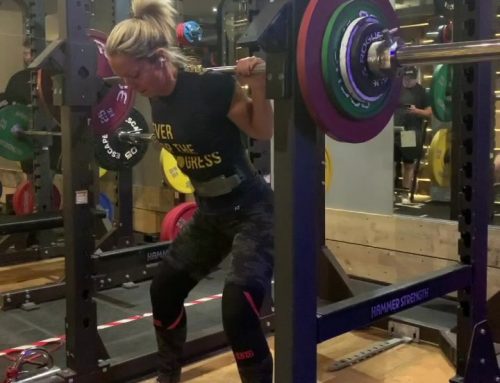
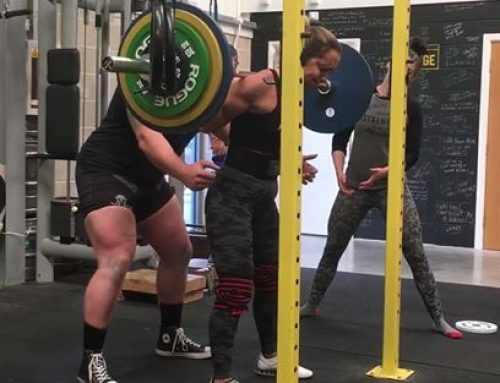
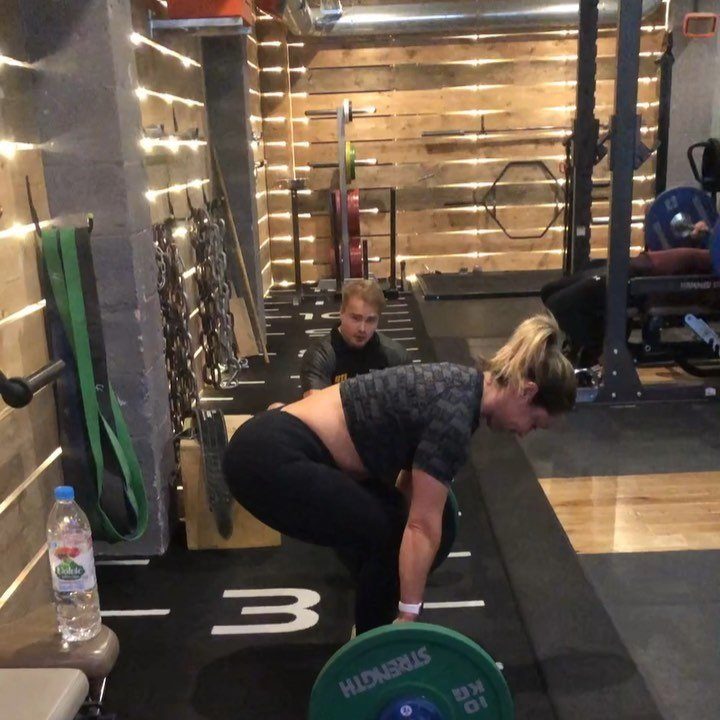
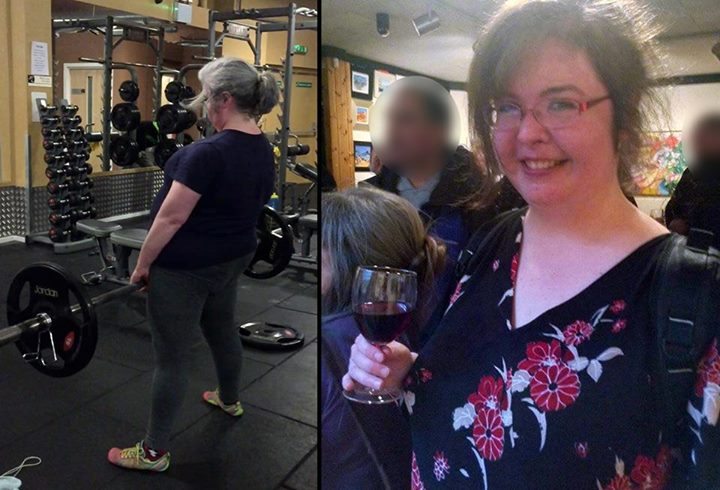
So this is Sheila (lifts-like-a-boss) Boll.
There will always be setbacks when it comes to dieting or trying to improve and implement lifestyle changes, and very often people can just take on too much, and try and change too much, too soon. Sometimes we slip back into old habits. Life happens, shit happens, and things don’t always go to plan; we are not robots after all. Plateaus and weight-regain are extremely common and it can be such a blow to motivation. I think people often feel like just giving up because it feels like they’ve undone their hard work or failed somehow, but regardless of any weight-loss angle, there are so many health benefits to exercising and lifting weights.
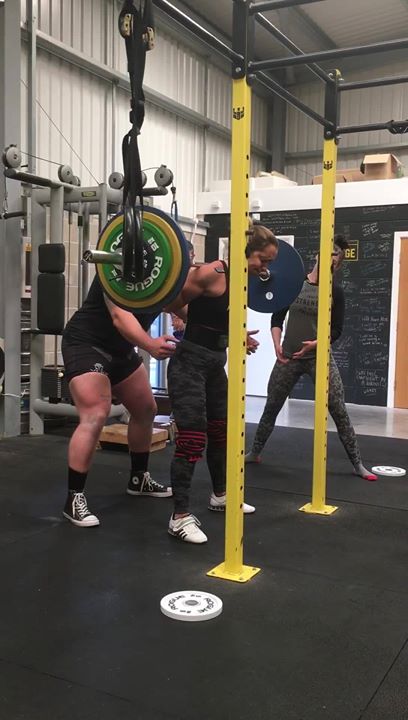
Sheila has been overweight her whole adult life, but lost around 5 stone from her heaviest weight. Like so many people dieting, Sheila hit a plateau a while back and regained some of the weight she’d lost, but to her credit, despite being in a place emotionally and mentally where she was struggling with her diet, she kept training.
It might only be once or twice a week but she’s has been one of my most consistent clients over the years that we’ve trained together. Inspired, I spoke to her recently about what motivates her to keep going. She says sometimes it’s hard to not be angry at herself for gaining some of the weight back, and that she can get extremely frustrated with herself in terms of her diet which she sometimes finds impossible to be consistent with even sitting at maintenance but she keeps training because SHE STOPPED TYING ALL OF HER PROGRESS TO THE SCALES.
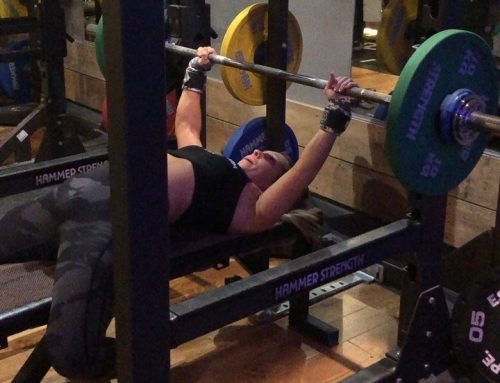
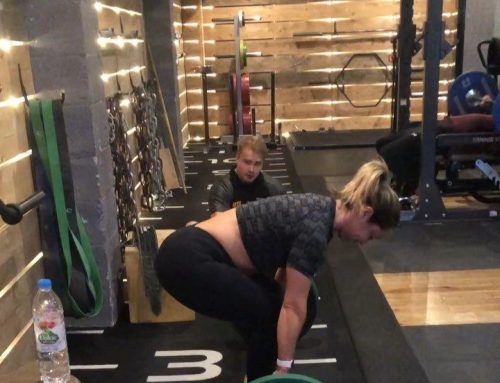
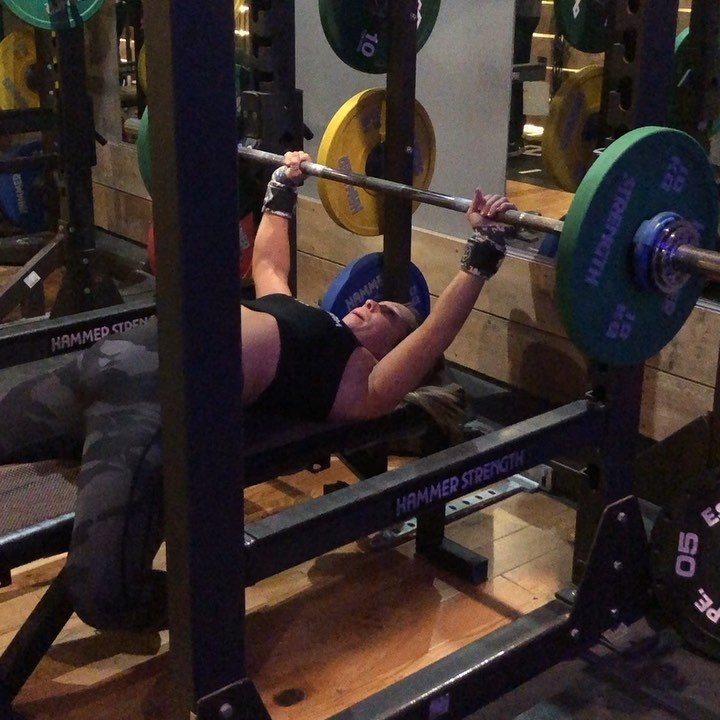
Some of the challenges that Sheila has overcome have been things that I, and no doubt a lot of people would take for granted. Things such as lying down on a weight bench and getting back up again, with her initially having to hold my hand to help her sit back up. And then having to work through the fear that when she’s training on her own, she might not be able to get up; that she might get stuck and have to ask for help. I think most of us can relate to feeling self-conscious in the gym, but this was on a whole different level for Sheila. Something that she tells me she found extremely humiliating, as basic movements were such a struggle for her. I can’t even imagine the kind of courage this must have taken to work through this. She now has this down along with her chest press, which she is currently smashing!
It’s the small things that have stuck in my head. She once told me about a job interview that she went for and they asked her to tell them something about herself. She proudly answered – “Well I can deadlift 60kg”. I just thought -THAT’S MY GIRL!
I remember the day she came up to me with a huge smile on her face and said “Guess what? I did it! I asked this big guy how many sets he had left on the smith machine the other day! AND he was really nice!”.
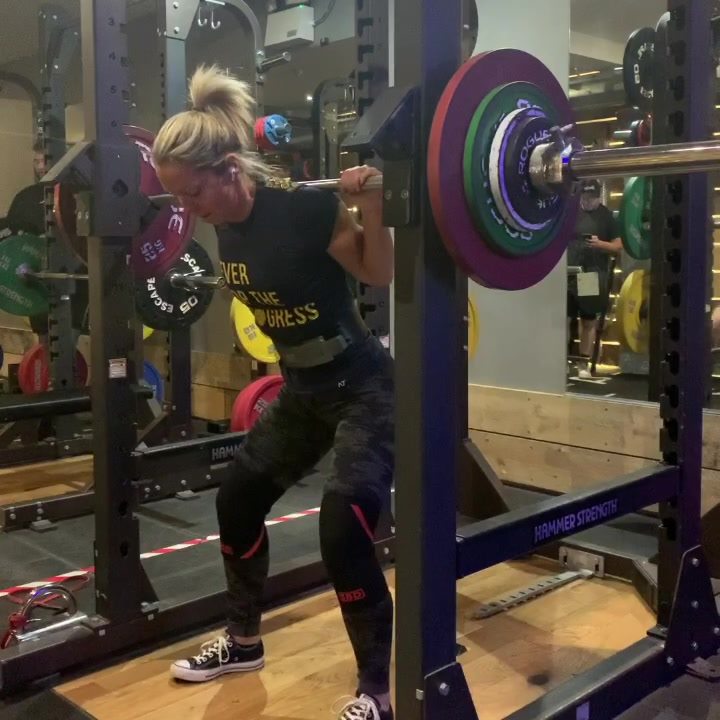
This just gave me a lump in my throat, because it just made me realise how much I take for granted. She now walks confidently around the gym, and the free-weights area, instead of feeling literally terrified even looking at ‘the man pit’ as she called it, and has found that people around her are in the main very friendly, welcoming and helpful. There’s now a sense of belonging, where she now feels she has a right to be, whereas she tells me before she felt out of place, and very anxious, where she didn’t even have the confidence to look around her because she was so self-conscious. And she admits she still is, but much less so, and feels she deals with it much better.
Some of the ways that lifting and exercise have made a difference to Sheila’s life:
She can carry her shopping up the stairs to her top floor flat whereas she would always have got her groceries delivered in the past.
She had regular falls before she started lifting, where she was repeatedly getting injured. She now hasn’t fallen for years.
“If it took 16 weeks for the ankle to heal, it never got a chance, as I’d twist it again within about 5-10 weeks. I’m really very proud of myself and so very relieved that this is not a part of my life any more! (knock on wood!) I feel like I can take better care of myself, am not going to be in need of walking aids or a burden on the NHS, and I will be able to keep my top-floor flat later in life.”
She is the healthiest she has ever felt:
“I’m not the thinnest I’ve ever been, but even when I was thinner and younger, I had health issues – physical, mental & emotional – that detracted from my quality of life. I feel having had to engage with NHS services so much that it’s really good not to. At one point, the phone number I rang most often (so the phone company wanted to make it my “best friend”!) was the doctor surgery. I like not being that person any more – I like the person I am becoming.”
She is a university lecturer and a natural academic, but exercise and lifting took her right out of her comfort zone in terms of her expertise, and is something she’s had to work hard to learn and apply. However she feels that she can now relate a lot better to her students when they struggle with certain things. “This is really big for me. I’ve always learned very easily and for much of my life, I only did what I was good at. So I lost out on a lot of life’s experiences and didn’t try – or learn it was ok to fail. When I started volunteering in Adult Literacies, the lessons were about the two-way nature of the learning experiences. After seeing people working so hard at something they weren’t good at, I realised I was asking more of them than I was giving myself. I feel like I’ve got more integrity in terms of being able to encourage students to learn something they’re not “naturally” good at. And I have a much stronger appreciation for how to “measure success” – both theirs and my own, which is different from absolute measures of an A mark or dress size 10.”
She feels that a heavy lifting session does wonders for her mental health – there’s nothing like a heavy lifting session to put the world to rights!
She now appreciates what her body does for her, and she tells me she now longer views exercise as punishment for being fat.
One of the most significant impacts has been on her social life. As Sheila stays on a top floor flat, it used to be such an effort for her to climb them that she’d only make the trip once a day, but now she doesn’t let that stop her from getting out and about, which she does regularly now to meet friends:
“I feel more independent, less trapped (although I love being at home!) and more sociable. It was embarrassing to tell folk that I’m not coming out because I’d have to walk up those stairs again, so I’d make excuses and generally not socialise. Now I know they’re not overwhelming and I can handle them.”
Her confidence in the gym has had an impact on the rest of her life and she’s now much more up for trying new things which is very apparent as every time I see her she seems to be involved in something new – swing dancing was the latest thing I think, or maybe it was the singing lessons! She has started volunteering with young people too and I just think what a lively and vibrant life this woman leads. Makes me feel like I need to get out more!
I think there’s lots to this we can relate to whether it’s overcoming anxiety in the gym or perhaps you’ve hit a plateau or maybe even regained some weight, but then you just have to think about all the other amazing aspects to lifting and exercise that impacts your life in a positive way. This isn’t a ‘before and after’ transformation, it’s an on-going journey with ups and downs, plateaus and setbacks – REAL LIFE, and a huge nudge to everyone to keep going or maybe to start ?
That’s what weight training does – it makes you feel more capable at life. It gives you a sense of feeling stronger, and empowered; for me there’s not a feeling like it. I asked Sheila to sum up why she lifts: “In short, my life is a lot more fun”.
I also asked her what she hoped to achieve from sharing her story and she said:
“To help people realise that it’s not all or nothing. You don’t have to measure progress by simply losing weight. People are in the gym for all kind of reasons, and may have made all sorts of progress that might not be visible to others. And that it doesn’t matter what size or shape you are, or what level you’re starting at, don’t ever feel that you don’t have a right to be in the gym, WE ALL HAVE A RIGHT TO BE THERE.”
Source